

Paint Protection Film (PPF) vs Ceramic Coating: When Should You Choose One (Or Both)?

Protecting your vehicle’s paint isn’t just about keeping it shiny — it’s about preserving value, preventing damage, and making long-term ownership easier. Two of the most talked-about protection options today are Paint Protection Film (PPF) and ceramic coatings.
While both serve important roles in paint protection, they are very different products designed for different goals. Understanding when to choose one — or when combining both makes sense — can help you make a smarter investment in your vehicle.
In this guide, we’ll break down PPF vs ceramic coating, explain how each works, and help you decide which option is right for your driving habits, vehicle type, and expectations.

Paint Protection Film, often referred to as a clear bra, is a transparent polyurethane film applied directly to your vehicle’s painted surfaces. Its main purpose is physical impact protection.
Key Benefits of PPF
Protects against rock chips and road debris
Absorbs minor impacts that would normally chip paint
Helps prevent swirl marks in high-impact areas
Some films have self-healing properties under heat
Maintains factory paint underneath
Common Areas for PPF
Front bumper
Hood and fenders
Side mirrors
Rocker panels
Door edges and handle cups
Limitations of PPF
While PPF excels at impact resistance, it does have downsides:
High cost, especially for full-vehicle coverage
Can slightly alter paint appearance (edges, seams)
Requires professional installation
Limited gloss enhancement
Still needs regular washing and maintenance
PPF is best viewed as armour — it protects against physical damage but does not significantly enhance gloss or reduce cleaning effort.
What Is a Ceramic Coating?

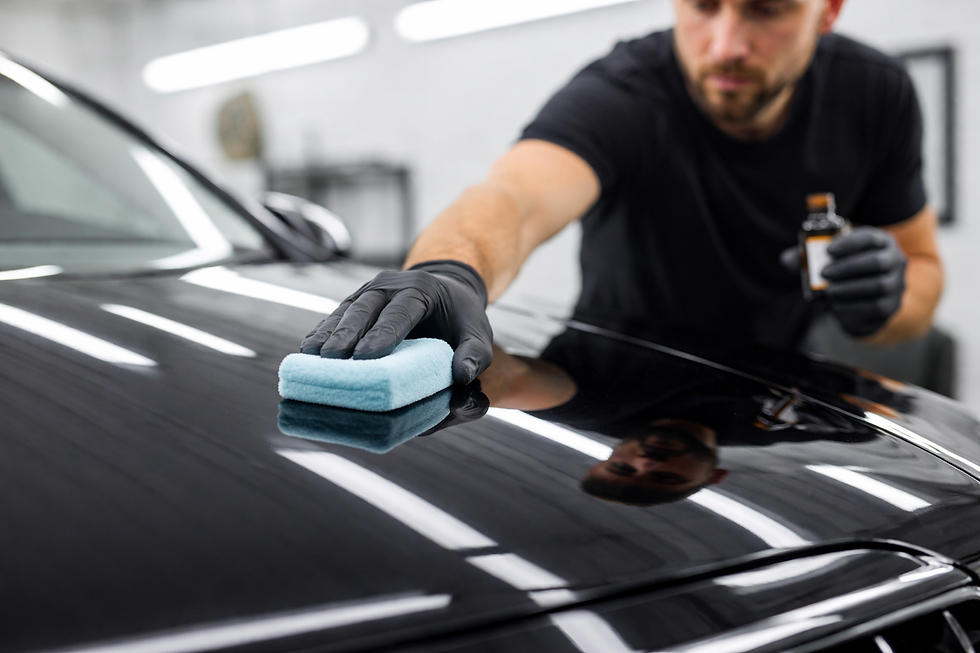
A ceramic coating is a liquid polymer applied to your vehicle’s paint that chemically bonds to the clear coat. Once cured, it forms a durable, hydrophobic protective layer.
Unlike PPF, ceramic coatings focus on surface protection and long-term appearance rather than impact resistance.
Key Benefits of Ceramic Coating
Deep, glossy finish that enhances paint clarity
Strong hydrophobic properties (water, dirt, salt release more easily)
UV protection to prevent fading and oxidation
Makes washing faster, safer, and less frequent
Helps reduce swirl marks caused by improper washing
Long-lasting protection (1–5+ years depending on coating)
What Ceramic Coatings Do Not Do
They do not prevent rock chips
They are not scratch-proof
They require proper preparation and maintenance
Ceramic coatings act like a shield for your clear coat, protecting against environmental damage while keeping your vehicle looking cleaner for longer.
PPF vs Ceramic Coating: Key Differences
Feature | Paint Protection Film | Ceramic Coating |
Rock chip protection | ✅ Yes | ❌ No |
Scratch resistance | Moderate (impact-based) | Light (wash-related) |
Gloss enhancement | Minimal | High |
Hydrophobic properties | Limited | Excellent |
UV & oxidation protection | Moderate | Strong |
Maintenance ease | Moderate | Excellent |
Cost | High | Moderate |
Coverage options | Partial or full panels | Full vehicle |
When Should You Choose Paint Protection Film?
PPF is ideal if:
You do a lot of highway driving
Your vehicle sees gravel roads or winter debris
You want to protect high-impact zones on a new vehicle
You’re preserving paint on a high-value or exotic car
PPF is especially popular for front-end protection, where rock chips are most common.
When Should You Choose a Ceramic Coating?
Ceramic coating is the better choice if:
You want your vehicle to stay cleaner for longer
You care about gloss, depth, and appearance
You want protection from UV rays, salt, and environmental fallout
You’re looking for a long-term, lower-maintenance solution
You drive daily and want easier upkeep
For most vehicle owners, ceramic coating delivers the best balance of protection, aesthetics, and value.
Should You Combine PPF and Ceramic Coating?
Yes — and this is often the best overall solution.
A popular approach is:
PPF on high-impact areas (front bumper, hood, mirrors)
Ceramic coating on the entire vehicle, including over PPF
Benefits of Combining Both
Maximum impact protection where it’s needed most
Uniform gloss across the entire vehicle
Easier cleaning on both paint and film
Extended lifespan of PPF due to reduced contamination
This hybrid setup is commonly chosen by enthusiasts and luxury vehicle owners who want complete peace of mind.
Which Option Offers the Best Value?
While PPF offers unmatched impact protection, it is often overkill for full-vehicle coverage on most daily drivers due to cost.
Ceramic coatings, on the other hand, provide:
Strong environmental protection
Significant visual enhancement
Reduced maintenance costs over time
Excellent return on investment for daily-use vehicles
For many drivers, ceramic coating alone delivers 90% of the benefits they’re looking for, without the high cost of full PPF.

Final Thoughts: Making the Right Choice
There’s no one-size-fits-all answer when it comes to paint protection.
Choose PPF if impact protection is your top priority
Choose ceramic coating if you want long-term gloss, easier maintenance, and protection from the elements
Choose both if you want the highest level of protection available
At Refined Appearance, we focus on professional ceramic coating services designed to protect your investment, enhance your vehicle’s finish, and make ownership easier year-round.
If you’re unsure which option is right for your vehicle, our team is always happy to help you decide based on how you drive, where you park, and what level of protection you expect.
👉 Contact us today for a ceramic coating consultation and protect your vehicle the right way.


Comments